
There are some experiences that don’t fully resolve when they end.
On paper, they’re finished. Closed out. Account balanced. Case complete.
But in the body, they linger.
Several years ago, I went through fertility treatments. Clinically, the experience was dehumanizing. Administratively, it was chaotic. I kept meticulous records because I had learned quickly that no one else would advocate for me.
I remember moments when my dignity felt stripped away—not through one dramatic event, but through a series of small, careless interactions. Being rushed. Being spoken about instead of spoken to. Being laughed at behind a door while already vulnerable. Being treated like a problem to process rather than a person to care for.
At the administrative level, it was worse. Bills arrived that didn’t match my records. Phone calls ended with apologies and assurances it was “a system error.” And then, weeks later, another letter would arrive—different amount, same threat. Thousands of dollars demanded during a season when I hadn’t even received treatment in months.
Eventually, after nearly a year, I wrote a letter saying I would never return. A senior leader called me personally. He reviewed my account and confirmed what I already knew: I didn’t owe them money. They owed me.
When the refund arrived, I felt something close to defiance. I decided I would spend every cent on reclaiming myself—on rest, on care, on joy. It felt like closing a door.
And for a long time, I thought it was.
Until recently.
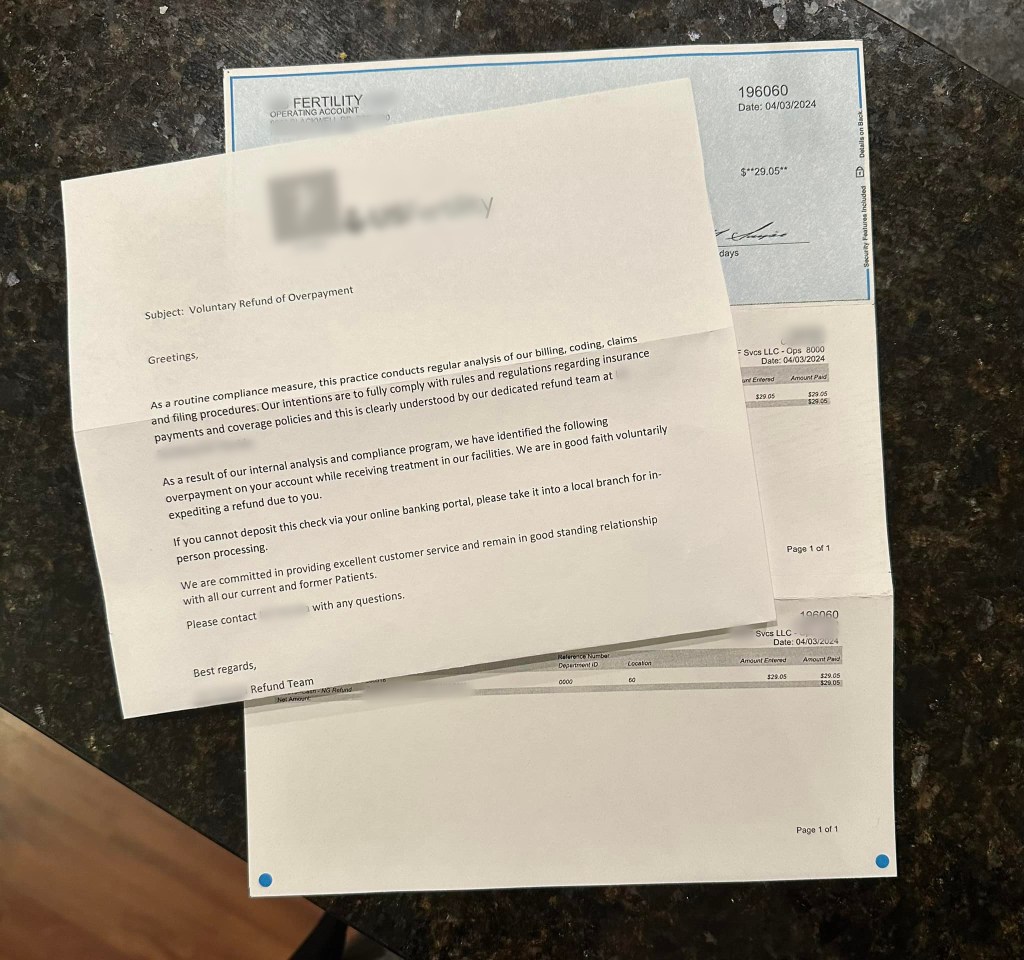
Years later, a letter arrived in the mail. A small check was enclosed—just over twenty-nine dollars. Apparently, another internal review had been done. Apparently, they had overcharged us years ago. Apparently, this was still unresolved.
The amount was insignificant.
The timing was not.
Holding that check, I realized something I hadn’t put words to before: institutions can close accounts long before they repair the harm they caused.
What resurfaced wasn’t anger—it was memory. The weight of being mishandled. The quiet erosion of trust. The way your body remembers what your mind tried to shelve away.
I don’t share this to indict a system or warn others away from a specific place. I share it because unfinished things have a way of returning—not to punish us, but to ask to be named.
If you’re in the middle of something that feels dehumanizing—something that’s being managed instead of tended—I want you to know this: the discomfort you feel may not be weakness. It may be your humanity insisting it matters.
And if you’re years removed from an experience that still echoes unexpectedly, you’re not imagining it. Closure isn’t always granted by paperwork. Sometimes it arrives slowly, in strange forms, asking to be acknowledged at last.
The storm does pass.
But some things leave residue.
And naming that truth is sometimes part of healing.
 Growing A to Z
Leave a comment