
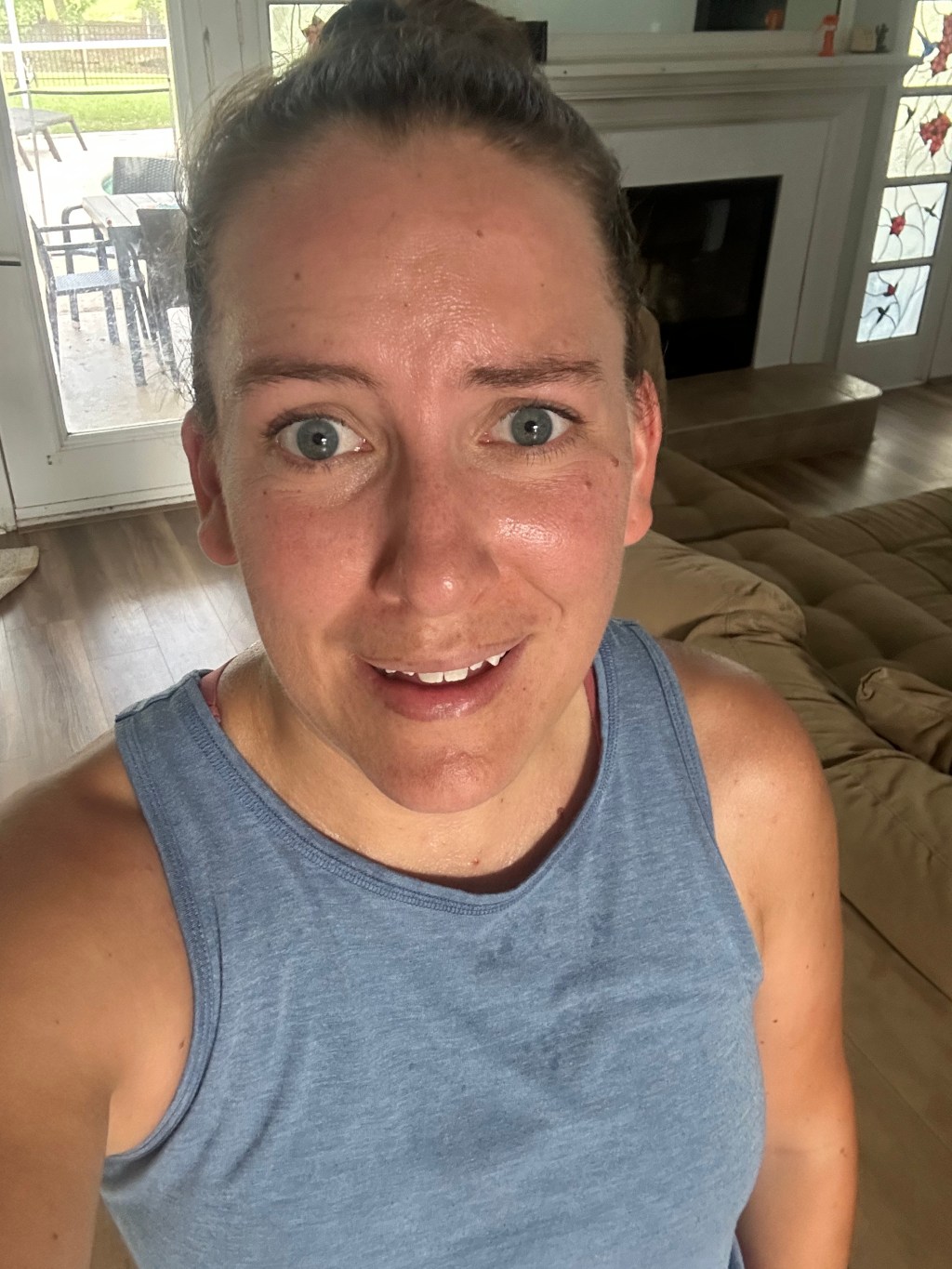
There’s something about exercise that I don’t hear talked about very often—especially by people who don’t consider themselves athletic.
Working out can feel disproportionately hard. And when you look around, it’s easy to assume it’s hard because you are bad at it—while the person next to you is just built for this.
But here’s what I’ve learned:
Even if it looks easier for someone else, the work itself isn’t actually easier for them.
About a month ago, I started running. And I say that very loosely.
I’ve never been able to run a mile. Not once. So that became the goal—not speed, not distance beyond that. Just: run a mile.
To get there, I started doing twenty-minute walk–run workouts. Nothing fancy. No heroics. Just showing up and moving.
One thing I’ve come to love about fitness trackers—and tools like perceived exertion scales—is that they tell the truth over time. They don’t flatter you, but they also don’t lie.
Here’s the interesting part:
Over the last month, running has not gotten easier.
It still feels hard. My lungs still burn. My legs still complain. Some days I feel slow and tired and very aware of my limits.
But what has changed is what I’m able to do.
On my very first run, in twenty minutes, I covered just over a mile. My average pace was slow. My fastest moments were brief. It felt like a lot.
Less than a month later, in the same twenty minutes, I went farther. My average pace improved. My fastest pace was significantly faster.
What surprised me most wasn’t the improvement—it was this:
On a day when I felt especially tired, the pace that felt slow to me was still on par with the fastest pace from my first run.
Even more interesting? When I looked at the effort data—how hard my body was actually working—the difference between those two runs wasn’t dramatic. The later run was harder, yes, but not exponentially so.
Which means this:
The work didn’t get easier.
My capacity increased.
And I think that distinction matters far beyond exercise.
We often expect progress to feel like relief. Like ease. Like something suddenly becoming comfortable.
But growth doesn’t usually work that way.
What actually changes is not the difficulty—but our ability to meet it.
Our “best” gets better, even when the effort still feels costly.
That realization has been deeply encouraging to me. Because it reframes perseverance. It frees me from waiting for things to feel easy before believing they’re working.
So if you’re in a season where something still feels hard—physically, emotionally, spiritually—maybe that doesn’t mean you’re failing.
Maybe it means you’re building capacity.
And maybe, one day soon, you’ll look back and realize that what once required everything you had is now something you can carry—still breathing hard, still working—but stronger than before.
 Growing A to Z
Leave a comment